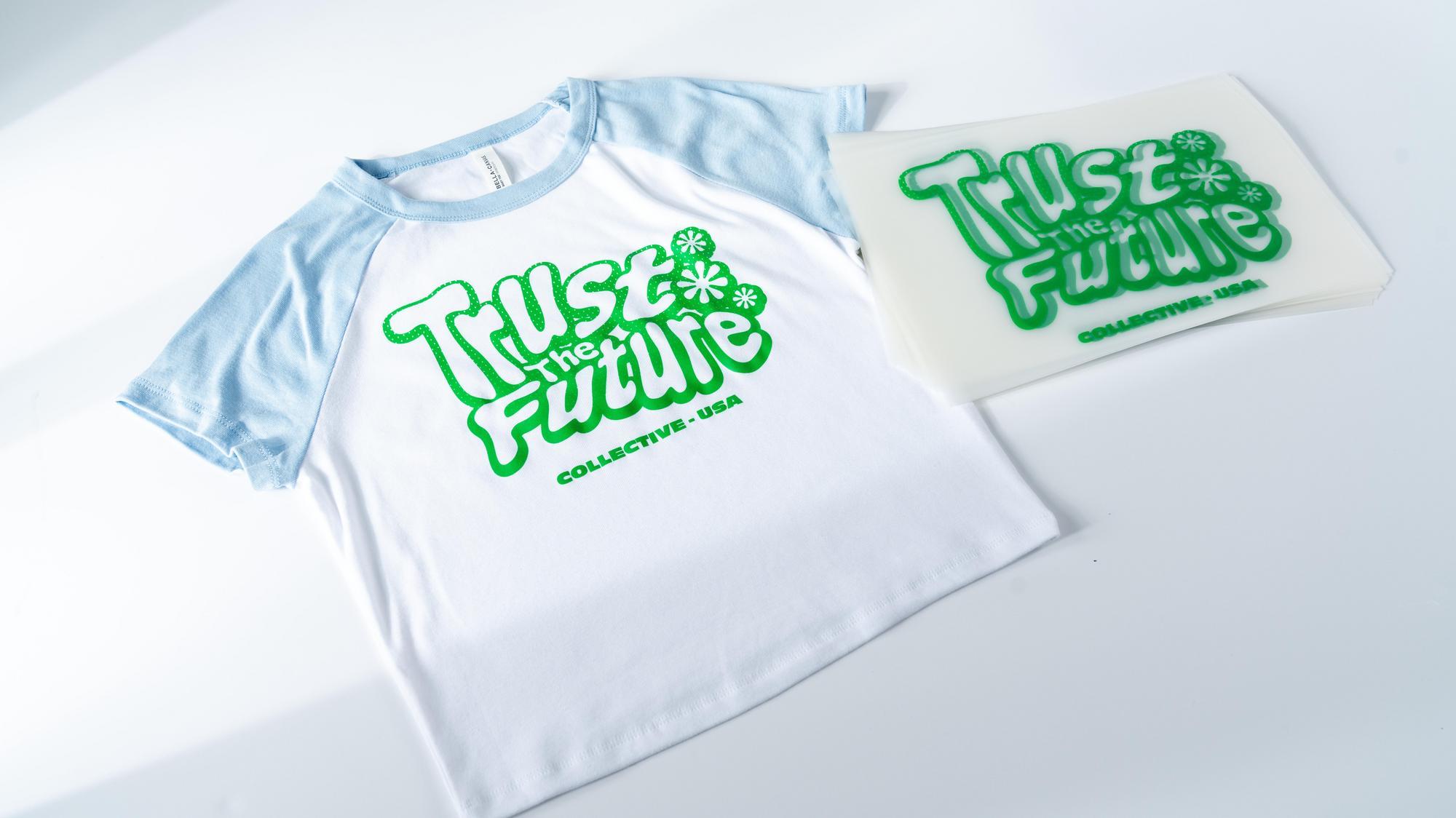

Direct-to-film (DTF) has quickly become the go-to solution for apparel decorators, and it’s easy to see why. It’s simple. It’s versatile. It works for almost any design, on demand.
But here’s the problem: many decorators default to DTF for every order… even when it’s not the most profitable choice. If you’re running larger orders, especially simple, one-color designs, DTF could be quietly eating into your margins.
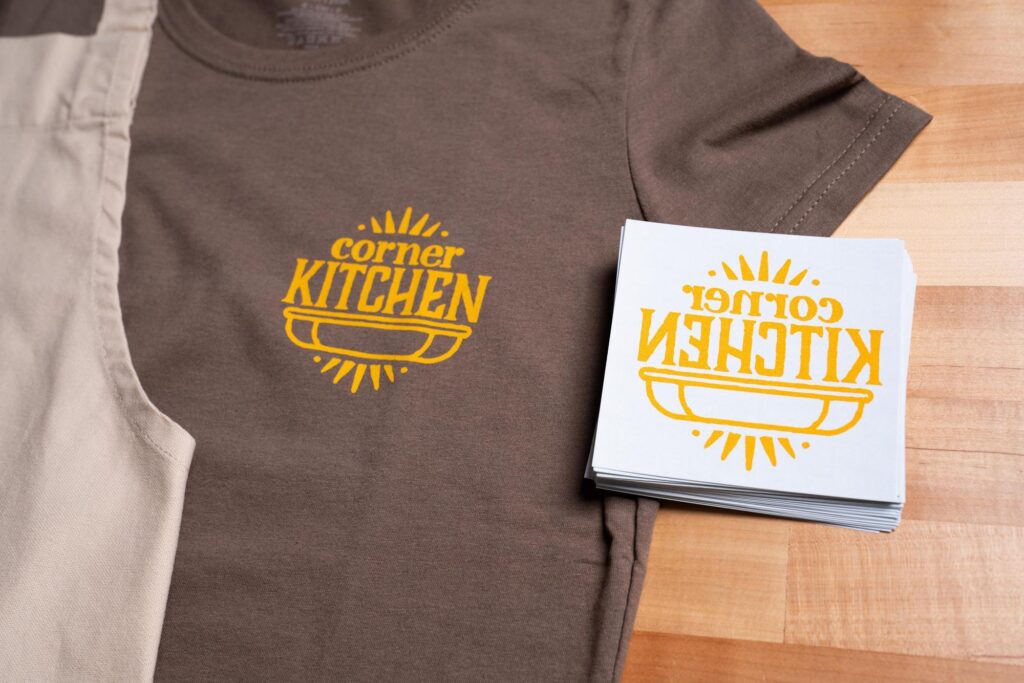
There’s a faster, more cost-effective alternative that often gets overlooked: screen printed transfers.
Why Decorators Default to DTF
DTF checks a lot of boxes. It’s versatile across a wide range of fabrics, makes full-color designs easy, and often comes with low (or no) minimums. So naturally, it becomes the “safe” choice, even for jobs where it’s not the best fit.
For larger orders, one-color logos, or oversized prints, it’s worth considering an alternative. While DTF excels in many applications, heavy ink coverage can feel less breathable on garments. And when you’re producing at scale, the costs, both in time and money, start to add up quickly.
That’s where switching methods can make a meaningful difference in your bottom line.
The Hidden Cost: Application Time Adds Up
When you’re pressing dozens (or hundreds) of garments, seconds matter. Think about it: the application time for a DTF transfer is 12-15 seconds, versus the 4-6 seconds required for screen printed transfers.
That’s a difference of 6–10 seconds per garment.
What does that actually mean?
Let’s break it down:
100 shirts
- DTF: ~20–25 minutes of press time
- Screen printed transfers: ~7–10 minutes
500 shirts
- DTF: ~1.5–2+ hours
- Screen printed transfers: ~35–50 minutes
That’s potentially cutting your production time in half on press time alone. Now factor in labor costs, throughput, and how many more jobs you can complete in a day… and the impact becomes clear. Plus, screen printed transfers typically have a lower per-unit cost, especially for high order volumes. So if you’re decorating a large order, these transfers save you time and money.
Built for Repeat Orders & Print-On-Demand
Here’s where screen printed transfers really stand out: shelf life.
When stored properly, they can last for an extended period of time, making them ideal for repeat customer orders. Instead of reordering transfers every time, you can order in bulk, keep inventory on hand, and print on demand as orders come in.
That means:
- Faster turnaround times
- Less ordering friction
- More control over your production schedule
The Smart Strategy: Use the Right Tool for the Job
DTF isn’t going anywhere, and it shouldn’t. It’s an incredible tool. But profitability comes from choosing the right method for the right order.
Use DTF for:
- Full-color designs
- Small runs
- One-off prints
Switch to screen printed transfers for:
- One- to two-color designs
- Larger quantities
- Repeat jobs
The Bottom Line
If you’re using DTF for everything, you’re likely leaving money on the table. By shifting larger, simpler orders to screen printed transfers, you can:
- Cut press time in half
- Reduce cost per print
- Increase daily output
- Boost overall profit margins
Same heat press. Same simplicity. Better efficiency.